


Passover - Sermons, Bible Studies, Articles, and Essays

Why Was Jesus Not Crucified as Passover Began? (Part One)
'Ready Answer' by David C. GrabbeThe church of God has historically observed the Passover just after sunset as the 14th day of Abib begins, as commanded in Exodus 12:1-14. Jesus Christ observed the Passover with His disciples at the beginning of the 14th day. He ate the Passover with them that evening after the 14th had begun, prior to His arrest later that night.
Is Passover on the First Day of Unleavened Bread? (Part Two)
CGG Weekly by David C. GrabbeBy the lifetime of Jesus Christ, the Jews had two competing ways to determine when to observe the Passover. One was observed by the people in their homes in the evening as Abib 14 began, and the other, led by the priests at the Temple, was kept in the late afternoon of Abib 14. In the Gospels, Jesus and His disciples are shown obse
Passover and Friends United in Truth (Part One)
CGG Weekly by Mark SchindlerPassover is a time when Christians should focus on Jesus Christ and their relationship with Him. It is an annual opportunity for those baptized and raised to newness of life. Participation in this solemn memorialization of Christ's death requires careful preparation, as emphasized by the apostle Paul. Each individual must examine t
Is Passover on the First Day of Unleavened Bread? (Part One)
CGG Weekly by David C. GrabbeThe original instructions for Passover clearly stipulate that it is a single day, Abib 14, followed by the seven-day Feast of Unleavened Bread beginning on Abib 15. These instructions directed the Israelites to observe Passover in individual homes, catching the blood of the lamb in a basin and smearing it on the doorposts and linte
Deuteronomy 16, Passover, and the Night to be Much Observed
Sermonette by John W. RitenbaughPassover is a separate festival from others like the Days of Unleavened Bread, to be observed at home as per other scriptures, creating a contrast with the instructions in Deuteronomy 16 which specify a different location for the sacrifice. Additionally, the term Passover in Deuteronomy 16:1 may be misleading or an error, as the co
Should Passover Be Observed for Seven Days?
CGG Weekly by David C. GrabbeIn Ezekiel's Millennial vision, God's instructions for worship after Jesus Christ returns include the annual festivals, with specific guidance on the Passover. Ezekiel 45:21 has often been punctuated by translators in a way that suggests Passover lasts for seven days and is part of the Feast of Unleavened Bread. However, the Hebrew

Passover: An Extraordinary Peace Offering
Sermon by David C. GrabbeEach year, we observe the Passover at the beginning of the 14th of Abib, commemorating the death of Jesus Christ. This annual observance is not merely about the sin offering, though Christ fulfilled that aspect on Passover afternoon. Instead, Passover carries a deeper significance, rooted in the instructions given for the first Pas

Is the Passover Just a Sin Offering? (Part One)
Article by David C. GrabbeEach year, dedicated followers of Jesus Christ observe the Passover at the beginning of the fourteenth day of Abib, commemorating His death. This annual observance serves as a memorial of His sacrifice, prompting reflection on which facet of His death should be kept in view while partaking of the bread and wine. The Passover, obser
Why Wasn't Jesus Christ Crucified at the Start of Passover?
Sermonette byJesus was crucified late on Abib 14, yet the Passover lambs were to be killed at the beginning of the 14th. The time of Christ's death is highly significant.

Why Was Jesus Not Crucified as Passover Began? (Part Two)
'Ready Answer' by David C. GrabbeJesus Christ kept His final Passover with His disciples the night before He suffered, setting the example for us of when and how to keep it in remembrance of Him. As our Passover, He did not die until much later, near the end of the 14th day of the first month. The timing of His crucifixion on the afternoon of Abib 14 points to sig
Passover (Part Nine)
Sermon by John W. RitenbaughPassover holds a significant place in our spiritual lives, demanding detailed examination. The biblical accounts of unusual Passover observances under righteous kings Hezekiah and Josiah reveal a backdrop of deep idolatry among the people, who practiced abominations detested by God. These kings enforced obedience, driving dramatic

The Bread and Wine of Passover
Sermon by David C. GrabbePassover stands as a significant ritual in the New Covenant, clearly supported by Scripture, with even mainline churches retaining a form of it, though often under different names and observed at different times. It centers on a meal, with a primary focus on eating, particularly the bread and wine, which are undeniable symbols in t
Passover and the Blood of Jesus Christ
Sermonette byThe observance of Passover holds profound significance as it encapsulates various aspects of the blood of Jesus Christ. When we drink of the cup at Passover, we do so with understanding and appreciation of what the Father and the Son have done and continue to do. The Hebrew word for Passover, meaning an exemption or to pass by with
Passover (Part Ten)
Sermon by John W. RitenbaughThe instructions in Deuteronomy 16, as originally given by God, were for Unleavened Bread and not Passover. The word Passover was edited into Deuteronomy 16 at a later time, likely after the Jews returned from captivity in Babylon, when both feasts were commonly called Passover. This editing created the appearance of a 15th Passove
Passover (Part Five)
Sermon by John W. RitenbaughThe Passover, as detailed in God's Word, is a critical doctrine that reveals the truth through careful examination of Scripture. It exemplifies the importance of adhering to biblical evidence over external influences. There are eight specific elements connected to the original Passover, each grounded in Scripture, demonstrating the
Jesus' Sufferings on Passover
CGG Weekly by Ronny H. GrahamThe sequence of events that took place on Passover, from Jesus' arrest through His death on the cross, was orchestrated for our learning so that we could discern the Lord's body and appreciate deeply what God did for us. After finishing the Passover meal, Jesus and the disciples walked to the Garden of Gethsemane, where He faced th
Passover Preparedness
Sermonette by John O. ReidWe are to seriously consider this season, examining ourselves carefully and soberly, measuring ourselves against the sinless life of Jesus Christ.
The Second Passover
Sermonette by Richard T. RitenbaughGod's Sabbath and holy days are sacred times that cannot be rescheduled, yet for the vital annual event of Passover, He provides a provision to observe it at a later time if it is unavoidably missed. This allowance, known as the Second Passover, underscores the importance of keeping this appointment with Him. In the time of Hezekia

Passover, Obligation, and Love
'Personal' from John W. RitenbaughThe concept of obligation is integral to the seriousness of Passover and the Feast of Unleavened Bread. Passover serves as a reminder of Christ's death, the supreme example of unselfish, sacrificial service and love. When the fallen woman washed Christ's feet with her tears, wiped them with her hair, kissed them with her lips, and
Passover (Part Two)
Sermon by John W. RitenbaughPassover holds a central place in God's purpose, as it is intricately tied to the salvation and eternal life offered through Jesus Christ. In John 6:49-51 and 54-58, it is emphasized that eating the flesh and drinking the blood of Christ, symbolized in the Passover, is essential for eternal life, indicating a lifelong commitment be

Holy Days: Passover
Bible Study by Richard T. RitenbaughThe observance of the Passover marks the initial step in God's plan of salvation for mankind. It serves as an annual reminder of the need for forgiveness and the beginning of a right relationship with Him. When God called the children of Israel out of Egypt, He showed them when the year began so they could observe His holy days, sy
Passover (Part One)
Sermon by John W. RitenbaughThroughout the history of God's church, in both Old and New Covenant times, the Passover has been one of the most attacked observances. It faces recurring challenges, as it did in various decades, with attempts to abolish it dating back to the second and third centuries during the Quartodecimani Controversy. In that period, the wes
Passover (Part Three)
Sermon by John W. RitenbaughPassover holds a central importance as a symbol of life and commitment. Jesus Christ declares Himself as the bread of life, stating that whoever eats His flesh and drinks His blood has eternal life and will be raised up at the last day. He emphasizes that His flesh is true food and His blood true drink, ensuring that those who part
Why Passover and Not Easter?
CGG Weekly by Richard T. RitenbaughPassover holds a significant place for all Christians as a sacred observance, not merely a Jewish festival. Jesus Christ Himself, through the apostle Paul, commanded the church to celebrate Passover on the night He was betrayed, which corresponds to the evening of Nisan 14 on the Hebrew calendar. This practice was maintained by the
Passover (Part Eight)
Sermon by John W. RitenbaughOur discussion focuses on the significance of Passover and its historical observance among the Israelites, highlighting deviations influenced by pagan practices and royal authority. At the same time that God established a festival for Israel, a pagan seven-day celebration to Baal coincided with the Feast of Unleavened Bread, occurr
Passover (Part Four)
Sermon by John W. RitenbaughIn the context of returning to God's ordinances as highlighted in Malachi 3:6-7, it is evident that the people had strayed from keeping His statutes, including those related to Passover. This sacred observance had been neglected and replaced by human traditions, deviating from the divine instructions. Regarding the timing of Passov
A Pre-Passover Look
Sermon by John W. RitenbaughAs we approach Passover and the Days of Unleavened Bread, it is crucial to prepare ourselves fittingly for this significant time. Passover, though not a holy day, carries the most important preparation of all, setting the stage for our participation in the remainder of God's plan as it begins the annual rehearsal of His purpose. Su
Passover (Part Six)
Sermon by John W. RitenbaughPassover, as originally instituted, holds a specific and detailed pattern that God commanded to be followed. It occurred at the beginning of the fourteenth day of the first month, a time marked by intense preparation and activity. On this day, the lamb was slain, cleaned, and roasted, with the people remaining in their houses throu
Passover (Part Seven)
Sermon by John W. RitenbaughPassover holds a significant place in the observance of God's commands, as it commemorates a pivotal moment in Israel's history. The original instructions for Passover, as given in Exodus 12, emphasize a domestic celebration where the lamb was killed at the beginning of the fourteenth day of the first month, at home, by the head of
Is the Passover Just a Sin Offering? (Part Two)
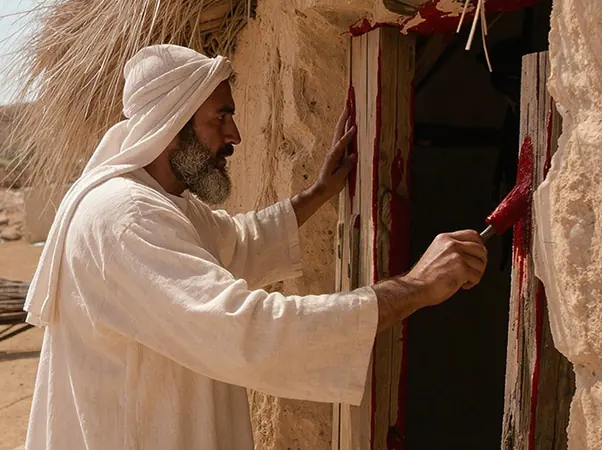
Article by David C. GrabbeThe Passover observance begins with God's instructions in Exodus 12 that every household select a lamb on the tenth day of the month, apply its blood to the doorposts and lintel, and consume the roasted flesh that night with unleavened bread and bitter herbs while dressed for immediate departure. The text stresses that this lamb fu
Why We Observe Passover and the Days of Unleavened Bread
Sermon by John W. RitenbaughThe observance of Passover and the Days of Unleavened Bread holds profound significance as a memorial of what the LORD accomplished. In Exodus 13:3, Moses instructs the people to remember the day they came out of Egypt, out of the house of bondage, for by the strength of His hand, the LORD brought them out. This theme of divine int

Passover of the Most High God
'Ready Answer' by David C. GrabbeMelchizedek, in the context of Passover, brings bread and wine, the symbols of the New Testament Passover, rather than a lamb and bitter herbs as used by the Israelites in Egypt. This significant moment also marks the first mention of God's title, Most High, appearing four times on the eve of this Passover. Contemplating this title
Passover and Hope
Sermon by Richard T. RitenbaughPassover emerges as a profound beacon of hope amidst the pervasive gloom of personal, societal, and spiritual challenges. Despite the weight of despair that can accompany self-examination and the recognition of ongoing struggles, Passover stands as a reminder of hope that must not be overshadowed by darker matters. It is a season w
Was Jesus Christ's Body Broken? (Part Two)
CGG Weekly by David C. GrabbeThe instructions for the Passover sacrifice reveal a significant detail about the integrity of the offering. In Exodus 12:46 and Numbers 9:12, God stipulates that the bones of the Passover lamb must remain intact, a requirement unique to this sacrifice. Jesus is our Passover, as stated in I Corinthians 5:7, and God ensured that thi

I Am Barabbas
Article by StaffAt Passover time each year, we are reminded that God leaves nothing to chance. The story of Barabbas, who received Pilate's Passover pardon in AD 31, serves as a powerful symbol of our own redemption. Barabbas, a convicted murderer, was set free while the innocent Jesus Christ of Nazareth took his place on the cross. His name, deri
Was Jesus Christ's Body Broken? (Part One)
CGG Weekly by David C. GrabbeThe phrase "Christ's broken body" is often used, but its accuracy and faithfulness to Scripture are questioned, especially in relation to the observance of the Passover. In I Corinthians 11:23-24, Paul provides the source for this concept, though the exact phrase is not found in the Bible. Jesus Himself, in John 6:51, speaks of the

How Often Should We Partake of the Lord's Supper?
Herbert W. Armstrong BookletThe original Passover marked the exodus of the children of Israel out of Egypt, as recorded in the 12th chapter of Exodus. On the 10th day of the first month, they were to take a young lamb without spot or blemish, keeping it until the 14th day of the first month, Abib, when they were to kill it in the evening, during the

His Bones Were Not Broken
Sermon by Ted E. BowlingTomorrow night, we will be taking the Passover, approaching this solemn occasion with the right attitude and heart. The focus of Passover is not on us, but on the sacrifice of Jesus Christ for the payment of our sins, that we might be forgiven. Jesus Christ is the perfect antitype of the lamb slain at the first Passover in Exodus 1
Was Jesus Christ's Body Broken?
Sermonette by David C. GrabbeWas Jesus Christ's body actually broken? If so, it would have symbolized disqualification and a broken covenant. Only the bread of Passover was broken.
Eat in Haste?
Sermonette byThe Israelites were to eat the Passover, not in haste, but with serious reflection. The only thing standing between them and death was the blood on the doorpost.
Remember Me
Sermonette by Ronny H. GrahamGod asks that we use the Passover to bring to remembrance His redemptive act, especially how our sins caused Christ to die in our stead.
Truly Unleavened
Sermon by Richard T. RitenbaughDuring this significant time of year, we observe Passover and the Days of Unleavened Bread, recognizing our identity as sons and daughters of the Great God, preparing to unite with our Savior, Jesus Christ. Passover, as outlined in Leviticus 23:4-8, occurs on the fourteenth day of the first month at twilight, known as the LORD's Pa
Christ's Death, Resurrection, and Ascension
Sermon by Richard T. RitenbaughAs we commemorated the Passover this past Friday, we reflect on its profound significance. Jesus of Nazareth, the Christ, our Savior, our Redeemer, the Messiah, died 1,964 years ago on the day of the Passover, Nisan 14. Without a doubt, He was crucified and died on Passover day, as confirmed in Scripture. In I Corinthians 5:7, it i

Purge Me With Hyssop
Article by StaffIn the context of spiritual cleansing, the significance of water is profoundly illustrated during the Passover, particularly in the actions of Jesus Christ. At His last Passover, just before His death and resurrection, He instituted the footwashing ceremony, a powerful act of humility and purification (John 13:1-17). Unlike the vai
Was Jesus Christ's Body Broken? (Part Three)
CGG Weekly by David C. GrabbeThe Passover unites us with Jesus Christ through a sacrificial meal, as described by Paul in I Corinthians 11:23-25. Partaking of the cup of wine and the bread during Passover are acts of communion, indicating sharing, participation, and fellowship. The bread is broken for the sake of sharing so that everyone can participate in the
The Selfsame Day
Sermonette by John W. Ritenbaugh (1932-2023)God's precise control over time is evident in the observance of Passover, a significant event tied to specific dates and anniversaries as outlined in Scripture. In Exodus 12:41-42 and 51, it is recorded that the children of Israel departed from Egypt on the selfsame day after 430 years, marking the exact anniversary of a p
Garden of Gethsemane: The Oil Press
Sermonette by Ted E. BowlingThe Garden of Gethsemane has particular significance because it was not only an olive grove, but also the location where olives were pressed into oil.
Death of a Lamb
Article by StaffDuring the Passover season, members of God's church reflect on the Old Testament symbolism of the slaughter of lambs, which remains deeply relevant to modern-day Christians. The ancient ritual of sacrificing the Passover lamb, though no longer practiced, embodies enduring spiritual principles. Each year, as the Passover season appr
What Does 'Discerning the Lord's Body' Mean? (Part Three)
CGG Weekly by David C. GrabbeThe apostle Paul warns the Corinthians in I Corinthians 11:27-29 that, when taking the Passover, they risked eating and drinking judgment to themselves by not properly discerning the whole Body of Christ. By esteeming some members and despising others, they were signifying that Christ's blood was worth more for some parts of the Bo
Remember Me (Part Two)
CGG Weekly by Ronny H. GrahamThe Passover service, as taught by the apostle Paul in I Corinthians 11:27-29, requires Christians to appraise themselves carefully before partaking of the bread and wine. Unworthy receivers of this meal contract tremendous guilt and incur great danger, potentially pronouncing a sentence on themselves, with Paul mentioning sickness
The Signs of God (Part Three)
CGG Weekly by David C. GrabbeGod designates the blood of the Passover lamb as a sign of salvation in Exodus 12:13. For the children of Israel, it symbolized their salvation from God's wrath. We must also come under the blood of the Passover Lamb through accepting it as the means of spiritual salvation and living our lives under obligation, which is another asp
A Look at Christian Suffering (Part One)
CGG Weekly by David C. GrabbeWhen we partake of the Passover each spring, part of that observance is for us each to drink from a cup of wine. The wine is symbolic of the blood of Jesus Christ, shed on our behalf, accomplishing tremendous things we cannot do for ourselves. The cup is a foundational part of the meaning of Passover, indicating that a person share
Are You Drinking of the Master's Cup?
Article by StaffIn a short time, we will be drinking a small portion of red wine at Passover. At Jesus' last Paschal service, He refers to it as drinking from His cup, symbolizing sharing the consequences of what is in that cup, whether good or bad, joyful or sorrowful. At Jesus' final Passover service, He poured wine into His cup, blessed it, and
Remember: Truth and the Real Torch of Freedom
Sermon by Mark SchindlerOn the evening that began the 14th day of the first month, we followed Christ's command to keep the Passover, just as God's people did worldwide. As recorded in I Corinthians 11:23-26, the Lord Jesus, on the night He was betrayed, took bread, gave thanks, broke it, and said, "Take, eat; this is My body which is broken for you; do t

The Awesome Cost of Love
'Personal' from John W. RitenbaughPassover and the Days of Unleavened Bread are largely about both political and religious freedom. To the Israelites in Egypt, the freedom God gave was largely political, as He broke their bondage to the Egyptians. Yet, in the larger purpose of God, the breaking of bondage is spiritual in nature. God intends the record of that event

Never Forget
Sermon by Ryan McClurePassover serves as a vital memorial for Christians, reminding us annually of the profound sacrifice of Jesus Christ on behalf of all mankind. In Exodus 12:1-7, the Lord instructed Moses and Aaron in Egypt to establish the first month of the year and provided detailed guidelines for observing Passover. Each household was to select a
Remember Me (Part One)
CGG Weekly by Ronny H. GrahamThe apostle Paul, in I Corinthians 11:23-30, recounts the events of the night our Savior was betrayed and provides instruction on the proper observance of Passover. Paul emphasizes that Passover is not about personal spiritual condition but about Jesus Christ and His sacrificial work. His shed blood redeems us, and through His righ
The First Day of Unleavened Bread (Part One)
Sermon by John W. RitenbaughThe observance of Passover holds profound significance as a distinct festival, separate from the Days of Unleavened Bread. Passover is designated to occur on the fourteenth day of the first month, as clearly stated in Leviticus 23:5, where it is identified as the Lord's Passover at even. This timing is further confirmed in Numbers

Head 'Em Up and Move 'Em Out!
Article by Mike FordThe question of the timing of Passover carries significant weight when considering the logistics of the Exodus. Some propose that Passover was observed on the 15th of Abib/Nisan, aligning with the night known as the Night to Be Much Observed, and that this timing was later adjusted. However, adhering to an incorrect day fo
In Honor of Jesus Christ
CGG Weekly by John W. RitenbaughDuring the Passover season, our minds are more forcibly focused on the importance of the sacrifice of Jesus Christ to our salvation. This time of the year, if properly used, purges some, and hopefully almost all, of the fog of forgetfulness that accumulates throughout the year. Ancient Israel had a major problem with forgetfulness
Evaluating the Price of Redemption
CGG Weekly by John O. ReidOf all of God's appointed times, the Passover is one that we should not just rush into without thought and preparation. If we do so, we will miss the awesome depth of its meaning, placing ourselves in danger of taking the Passover unworthily. To avoid this, we must stop to consider all that God has done for us and how we are to res
How Do We Keep God's Festivals?
'Ready Answer' by Richard T. RitenbaughAs the first signs of spring appear in the flowerbeds or in the branches of trees, the minds of longtime Christians often turn to the nearness of the Passover and the Feast of Unleavened Bread. We consider that we need to evaluate ourselves in preparation for another year of living God's way (II Corinthians 13:5), as well as to beg

Why Did Jesus Have to Die by Crucifixion?
'Ready Answer' by StaffThe following is a concise rewrite of the sections related to Passover from the provided material, maintaining the original tone and adhering to the specified guidelines regarding pronoun capitalization and content focus. Our Savior died a most horrible death on a stauros or cross, for me and for you. The Romans made an art form of

Why Is Atonement a Fall Festival?
Sermon by Richard T. RitenbaughPassover is placed on the Israelite agricultural calendar in the spring as one of three pilgrimage festivals. In the southern hemisphere Passover and Unleavened Bread occur in autumn while the remaining holy days shift by six months. Passover and Atonement address overlapping themes of redemption through sacrifice yet Passover cent
Chronic Difficulties
Sermon by Richard T. RitenbaughThe Passover occurred on a Wednesday in the years when Jesus Christ was crucified and resurrected. Jesus Christ's ministry spanned three and a half years and included four Passovers. The first Passover took place early in His ministry when He cleansed the temple. The second Passover occurred during the time when His disciples pluck

Footwashing: An Attitude of Service and Forgiveness
Sermon by Ted E. BowlingMembers of the body of Christ partake of the Passover as commanded and follow the example that Jesus established the night before His death. Jesus instituted the Passover ceremony which begins with the foot washing, then the taking of the bread which represents His broken body, and then the wine representing His shed blood. It is i

An Unpayable Debt and Obligation
'Personal' from John W. RitenbaughThe sense of obligation is very important to the proper understanding of Passover. I Corinthians 11 refers participants to the Passover service and the death of Jesus Christ to correct improper behavior. Jesus Christ instructs that the bread represents His body broken for others and the cup is the new covenant in His blood. Partici
Head 'Em Up and Move 'Em Out!
Sermonette byCan 2½ million people (with livestock and possessions) move out of a location (Ramses in Goshen) in five hours?
What Does 'Discerning the Lord's Body' Mean? (Part One)
CGG Weekly by David C. GrabbeIn Paul's instructions to the Corinthian church on observing Passover, he leaves no doubt about the gravity of the approach to taking it. In I Corinthians 11:29-30, he writes that because there is only one Bread of Life which John 6 identifies as Christ everyone who shares or partakes of that One Bread becomes a single spiritual bo
The Awesome Cost of Salvation
Sermon by John W. RitenbaughPassover focuses on the death of Jesus Christ as a spectacular event that God commands the church to observe. God requires this annual rehearsal to keep its major points in mind. Passover and the Days of Unleavened Bread center on freedom as the ultimate goal. The freedom that God brings comes progressively through continued discip
What Does 'Discerning the Lord's Body' Mean? (Part Two)
CGG Weekly by David C. GrabbeIn the Corinthian congregation some members were confused about whether the congregational meals were the Lord's Supper. By trying to observe the Lord's Supper or Passover on just any occasion the significance of the bread and the wine becomes muddled through familiarity and repetition. If any bread throughout the year symbolized J

'After Three Days'
Booklet by Richard T. RitenbaughThe Passover holds significant relevance in the timeline of Jesus Christ's crucifixion and resurrection. All four gospel writers mention that Jesus was tried, convicted, crucified, and buried on a preparation day, which is notably associated with the Passover. This day is not only a festival in its own right but also serves as the
The Wavesheaf and the Selfsame Day
Sermon by John W. RitenbaughPassover occurs on the fourteenth day of Abib. The Passover lamb is slain at ben ha arbayim. The bread and wine are taken after the footwashing on the night of the fourteenth. The sacrifice of Jesus Christ aligns with the ratification of the covenant in Genesis 15 during the afternoon of the fourteenth. A great darkness fa
Let Us Examine Ourselves
CGG Weekly by Ronny H. GrahamPassover is observed immediately before the Days of Unleavened Bread as one of the commanded rituals that God gives His people to perform. Through these physical acts He teaches deeper spiritual lessons about worthy worship and relationship with Him. The instructions for its observance come directly from Christ, as Paul explains in

The Plain Truth About Easter
Herbert W. Armstrong BookletThe Passover was ordained by God as a perpetual memorial of His people's deliverance, later fulfilled in the death of Jesus Christ. Jesus Himself observed the Passover with His disciples on the fourteenth day of the first month according to the sacred calendar, and at that final meal He replaced the roasted lamb with the new emblem
Debt and Obligation
Sermon by John W. RitenbaughA sense of obligation arises from recognizing the unpayable debt incurred through sin, which Christ alone settled through His sacrificial death as the Passover Lamb. This awareness forms the foundation for understanding Passover, as the service commemorates not merely an event but the supreme expression of divine love that redeems

Another Look at Footwashing
Article by Bill KeeseeOn the last night of His life, as recorded in the thirteenth chapter of John's gospel, Jesus Christ performed and instituted a significant ceremony during the Passover evening. While the other gospel writers focus on the bread and wine rituals instituted that same evening, John uniquely records the footwashing ceremony, highlightin

Unleavened Bread Basics
Sermon by David C. GrabbeThe text develops its discussion of Passover within the instructions for the Feast of Unleavened Bread by showing that Christ Himself is the Passover whose sacrifice makes His people truly unleavened. Paul states in 1 Corinthians 5 that because Christ our Passover was sacrificed, believers must keep the feast with the unleavened br
By This We Know Love!
Sermon by Martin G. CollinsPassover centers on Jesus Christ as the Lamb of God slain for the sins of the world, with the emphasis placed on His great love rather than on human sins. This focus highlights the contrast between the sinless, unblemished Lamb and flawed humanity. God initiates the systematic redemption of humanity through the Passover feast, esta
Footwashing
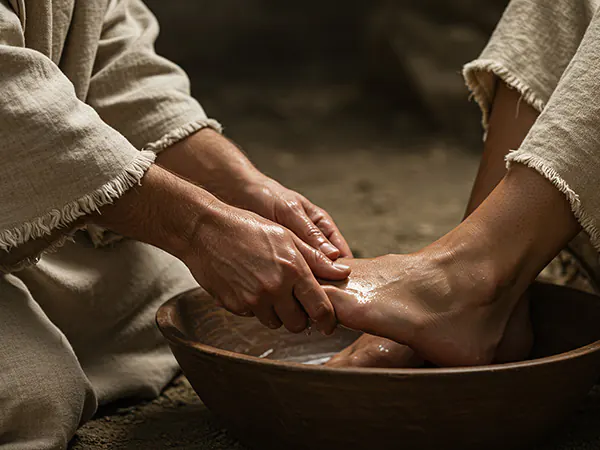
Bible Study by Richard T. RitenbaughThe Passover marks the beginning of a new cycle of God's festivals and holy days. In the annual service, Christians first participate in the footwashing ceremony before partaking of the unleavened bread and wine that symbolize Christ's body and blood. On the evening of Nisan 14, after the meal commonly known as the Last Supper, Jes
The Night to be Much Observed
Sermon by John W. RitenbaughThe material distinguishes Passover as the festival occurring on the fourteenth day of the first month, beginning at evening with the killing of the lamb. This event centers on two elements: the slaying of the lamb, which recalls humanity's part in the death of the Savior, and the eating of the lamb, which stresses the ongoing rela
Listen To The Lamb's Voice
Sermon by Mark SchindlerThe sermon develops its message about the Passover by drawing on the story of Ben-Hur to illustrate the need for careful self-examination as the observance approaches. The film shows how a man consumed by hatred and the desire for vengeance is ultimately transformed when he hears the voice of Jesus Christ and responds by releasing

What Does 'Examine Yourselves' Mean?
'Ready Answer' by StaffPassover is only a short time away. As Christians, we need to consider the self-examination process God's Word says we should be undergoing as the spring festivals approach. God expects us to prepare ourselves as mature Christians to rededicate ourselves to Him afresh at Passover and to put sin out of our lives diligently and activ
Eating: How Good It Is! (Part Four)
'Personal' from John W. RitenbaughThe teaching recorded in John 6 presents a figurative reference to taking the Passover. Jesus identifies Himself as the true bread from heaven whose flesh must be eaten and whose blood must be drunk if one is to possess everlasting life. This requirement points directly to the symbols of the Passover, yet the passage makes plain th